News
High-Purity Magnesium Oxide: The Key Functional Material for High-Definition Smartphone Display Substrate Glass
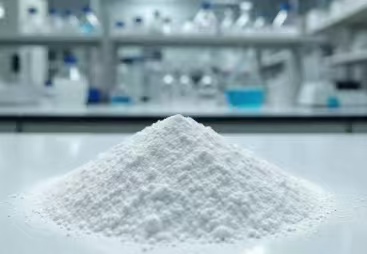
The ultra-thin and high-definition display performance of smartphones relies on a core fundamental functional material — 99.9% high-purity Magnesium Oxide. As an essential dedicated additive for the manufacturing of smartphone screen substrate glass, high-purity Magnesium Oxide empowers the forming processing, quality improvement and efficient production of substrate glass with its ultra-high purity and excellent stability, serving as an irreplaceable core auxiliary material in the modern high-end display panel manufacturing industry.
Smartphone screen substrate glass imposes extremely stringent industrial standards on purity, surface flatness, light transmittance and structural stability. Featuring low impurity and high purity, 99.9% high-purity magnesium oxide perfectly meets the production process requirements of high-end substrate glass. Firstly, its core value lies in fluxing and viscosity reduction to save energy and reduce consumption. During the high-temperature melting process of substrate glass, the original glass melt has high viscosity and poor meltability, which leads to high production energy consumption and continuous corrosion of furnace equipment, shortening the service life of the equipment. As an efficient fluxing agent, high-purity magnesium oxide can effectively decompose the molecular structure of glass melt, greatly reduce the viscosity of glass liquid at high temperatures, and significantly lower the melting processing temperature. This process optimization directly reduces production energy consumption by 10%–15%, which not only cuts down enterprises’ production costs, but also alleviates the erosion and loss of the furnace body caused by high-temperature melt, extends the service life of furnace equipment, and ensures the long-term stable operation of production lines.
Secondly, high-purity magnesium oxide effectively inhibits glass crystallization defects and consolidates the high-definition optical performance of screens. During the cooling and annealing forming process of substrate glass, crystals are easily precipitated inside the glass, forming visible defects such as crystal points and stripes, which directly damage the uniformity of glass light transmission, impair screen display effects, and cause large-scale product scrap. The addition of 99.9% high-purity magnesium oxide can effectively delay the growth rate of internal crystals in glass, broaden the temperature range for stable glass forming, and keep the glass in a uniform amorphous structure throughout the cooling process. It fundamentally eliminates quality defects including crystal points and stripes, endows the substrate glass with excellent characteristics of high light transmittance and uniform texture, and precisely meets the strict optical requirements of high-definition smartphone screens.
In addition, high-purity magnesium oxide can accurately regulate the glass hardening rate to adapt to high-end precision forming processes. At present, high-end smartphone screen substrate glass is generally produced by precision mass production technologies such as high-speed calendering and overflow down-draw, which require extremely high precision in the hardening rate of glass liquid. Excessively fast hardening will result in unqualified flatness of glass panels, while excessively slow hardening will fail to adapt to the high-speed mass production rhythm and restrict production efficiency. High-purity magnesium oxide can precisely adjust the curing and forming rhythm of glass liquid to accurately match the high-speed operation conditions of precision forming equipment. It ensures that the formed substrate glass has uniform thickness and flawless smooth surface, greatly improves the product yield, and provides solid process support for the large-scale mass production of ultra-thin glass and flexible display screens.
Throughout the entire production process, 99.9% high-purity magnesium oxide runs through the whole process chain of melting, forming and cooling of smartphone screen substrate glass, with multiple core values including energy saving and cost reduction, quality and efficiency improvement, process adaptation and performance optimization. Despite its tiny dosage, it plays an indispensable and crucial role. It is an invisible hero that supports the high-definition, thin and stable display of smartphone screens, and also a typical benchmark material for high-purity fine chemicals empowering high-end display manufacturing and industrial upgrading.
RELATED NEWS
- Why Magnesium Oxide Is Essential for High-Performance Rubber Seals
- Classification of magnesium carbonate
- The Unsung Hero of Tire Durability: How Magnesium Oxide Makes Tires Safer and Lo
- Essential Magnesium Element in Dairy Cow Diet-Magnesium Oxide
- The Critical Role of Magnesium Oxide in Electronic Ceramics: From MLCCs to 5G De
CATEGORIES
LATEST NEWS
CONTACT US
Name: Mrs. Ma
Mobile: +86-15097999758
Tel: +86-03193131499
Whatsapp:8615097999758
Email:sales@kaimeimg.com
Add:No.22, Tianyifu, Ping'an Road, Xiangdu District, Xingtai City, Hebei Province, China